- Vintage Calculators Offers
- sku: 3771046837860731
- COMMODORE AL-1000
AL-1000 COMMODORE Transistorized Programmable Calculator
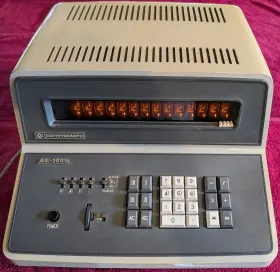
| Brand | COMMODORE |
|---|---|
| Manufacturer Part Number | AL-1000 |
| Part Type | CALCULATOR |
| Country Of Origin | JAPAN |
| Vintage | YES |
Review COMMODORE Old Early Transistorized Programmable Electronic Calculator
The Commodore AL-1000 Transistorized Programmable Calculator is a compact, portable, and powerful mathematical computing device introduced by Commodore Electronics in the late 1960s. This calculator was a significant advancement in the field of electronic calculators, offering a high level of programmability and functionality that set it apart from its contemporaries.
The AL-1000 features ten keys for each of the ten decimal digits, plus four functional keys for square root, reciprocal, logarithmic, and exponential calculations. At the heart of the calculator is a transistorized design, which not only made it more reliable and durable but also more energy-efficient compared to its vacuum tube predecessors.
One of the most impressive features of the AL-1000 is its programmability. It offers a 12-register memory, which can be used to store and recall complex mathematical expressions. Users can input up to 12 instructions, including add, subtract, multiply, divide, square root, reciprocal, logarithmic, and exponential functions, as well as conditional jump instructions. This allowed users to customize the calculator to perform a wide range of complex calculations with ease.
The calculator has a clear, easy-to-read display consisting of seven segments for each digit. It also features an error-correcting system that alerts the user if an incorrect entry has been made, ensuring the accuracy of calculations.
The Commodore AL-1000 Transistorized Programmable Calculator is housed in a compact, sleek, and stylish case made of high-quality plastic. Its portable design makes it an ideal choice for engineers, scientists, students, and professionals who need to perform complex calculations on the go. The calculator requires a 9V battery (not included) to operate and comes with a user manual and a protective pouch to keep it safe during transport.
In summary, the Commodore AL-1000 Transistorized Programmable Calculator is a versatile, powerful, and portable mathematical computing device that offers a high level of programmability and functionality, making it a valuable tool for engineers, scientists, students, and professionals alike. Its transistorized design, clear display, error-correcting system, and compact size make it a reliable and efficient solution for complex mathematical calculations.
The Commodore AL-1000 transistorized programmable calculator, introduced in 1965, was one of the earliest programmable calculators on the market. Here are the pros and cons of buying this vintage calculator:
Pros:1. Historical Significance: The AL-1000 is a piece of computing history. It was one of the first programmable calculators and paved the way for more advanced calculators and computers.
2. Manual Calculation: The AL-1000 allows for manual calculation, which can be helpful for understanding the underlying mathematics and for situations where electricity is not available.
3. Programmability: The calculator can be programmed to perform complex calculations, making it a versatile tool for engineers, scientists, and mathematicians.
4. Durability: Transistorized calculators are generally more durable than their vacuum tube predecessors, making the AL-1000 a reliable choice for long-term use.
5. Rare and Collectible: Due to its historical significance and rarity, the AL-1000 can be a valuable addition to a collection of vintage calculators or computers.
Cons:1. Limited Functionality: The AL-1000 is a relatively simple calculator compared to modern models. It can only perform basic arithmetic operations and has a limited memory capacity.
2. Complexity: The AL-1000 requires some knowledge of programming to use effectively. This can be a barrier for users who are not familiar with programming concepts.
3. Size and Weight: The calculator is large and heavy compared to modern calculators, making it less portable.
4. Power Consumption: The AL-1000 requires a power source to operate, which can be a disadvantage in situations where electricity is not available.
5. Repair and Maintenance: Repairing and maintaining the AL-1000 can be challenging due to its age and complexity.
Conclusion:The Commodore AL-1000 transistorized programmable calculator is a fascinating piece of computing history with both advantages and disadvantages. Its historical significance, programmability, durability, and rarity make it an attractive choice for collectors and those who appreciate the evolution of computing technology. However, its limited functionality, complexity, size and weight, power consumption, and repair and maintenance requirements may make it less practical for everyday use. Ultimately, the decision to buy an AL-1000 depends on the user's interest in vintage calculators, programming, and computing history.
Recommendation:If you are looking for a vintage calculator for historical or collectible purposes, the Commodore AL-1000 is an excellent choice. However, if you require a calculator for everyday use, you may want to consider a more modern and functional model.
Details:
This was Casio's first use of magnetic core memory; its earlier electronic calculators used discrete transistor flip flop circuits for the calculators working storage. Equivalent replacements for these transistors can still be found today, although with time they are getting a bit more difficult to find. As you can tell from the photos, calculator is packed with circuit boards that are stuffed full of these parts. This arrangement between Casio and Commodore provided a sales outlet in the extremely lucrative us Canadian markets for Casio, which had not yet established its own sales/support subsidiary.
Any potential buyer with an intent to repair the calculator proper operational condition should be well-versed in digital logic, transistor circuit design, and principles of operation magnetic core memory. While the calculator is branded Commodore, it was actually manufactured by Casio who also marketed in japan under same model name for Commodore. All of the Dixie tubes work just fine, and are bright clear. Diagnosis will certainly require at least a quality oscilloscope, preferably digital 'scope with deep waveform memory, and potentially logic analyzer programmable thresholds as used by this old transistor.
An example could be performing mark-up calculations for goods. They were there when I got the machine years ago, and should't become worse if calculator is handled with care. The programming mode does similar things, and trying to execute a program nothing useful. I have used this method for shipping old calculators years, and it has proven every time to result in a calculator making its destination with no damage due.
There is a small spot on the right side of upper cabinet where it appears either some kind chemical damaged surface, or something gouged it, which has discolored spot, can be felt when running your fingers over. I cringe to mention this, as fear someone will buy this artifact for the purpose of scrapping it out Dixie tubes, which in my mind would be a tragedy. The keyboard operates as if it is new, with the keys operating very smoothly and positively. This outer box will then be sealed on all edges, seams, and corners.
The AL-1000 is an all-transistor calculator. It does not correctly enter numbers into the display, nor it attempt to perform any of math operations, frequently doing nothing, or just randomly changing display. The boxes used are heavy-duty boxes, and the packing materials custom fit to assure calculator experiences a minimum of shock during shipping handling. The cabinet has turned somewhat of distasteful shade yellow/brown from its proper light gray color due to ultraviolet exposure from the sun, or artificial lighting, especially fluorescent lighting which was very common in office environments, is for plastics this era.
Cosmetically, the machine is in what I could classify as good condition. Commodore marketed, sold, and supported the calculators in north America. There are the usual signs of usage and handling over years, with a few scratches here there, but none really detract from appearance machine. To date, no official Casio service documentation such as schematics logic or component-level, manual, other has been found that would aid in troubleshooting and repair, however, a brilliant reverse-engineering job performed by calculator enthusiast, who painstakingly created complete logic-level schematic of.
The operation is somewhat random, with varying symptoms at different times. As a display-only item, or perhaps as prop in time period correct the transistors in this calculator were manufactured by Hitachi or neck, and are silicon-based devices rather than the earlier somewhat fussy germanium used some of earliest electronic calculators. I am open to any questions, and will do my best answer them.
There are no integrated circuits in this calculator. The AL-1000 was the second electronic calculator that Commodore marketed, with first being 500e, which also made by Casio for. Offered here is a fairly unusual-to-find Commodore AL-1000 programmable desktop electronic calculator, circa 1968. The programmable of the AL-1000 made it one a fairly small number programmable electronic calculators on market at time was introduced in japan by Casio.
There are a couple of small chips in the upper part cabinet near right rear corner machine. The core memory array consumes a good part of one the circuit boards, and looks to be in fine condition, with no broken cores or wires see photos. All of the logic is constructed from discrete component transistors, diodes, resistors and capacitors. The power supply is operating as it should, putting out the correct voltage s with acceptable ripple.
This was useful for storing formulas where the user could input variables in formula, then calculator quickly perform calculation.
specifications vintcalc:
- brand: Commodore
- mpn: Al-1000
- part type: Calculator
- country of origin: Japan
- vintage: Yes
returns vintcalc:
- policy: no returns
seller vintcalc:
- # reviews: 176
- rating: 100.0%
- city: estacada, oregon
payments vintcalc:
- other
- credit card: discover
- wallet: apple-pay
offer vintcalc:
- best offers: true
- started: february 24, 2026
- prices: $9.99–$1200.00
- item condition:
- Used
- Unspecified
- in stock #: 2
- sold #: 9
- availability: in stock
- options: ship-to-home
general vintcalc:
- category: Electronics > Vintage Calculators
shipping vintcalc:
- type: fixed
- service: usps ground advantage
- class: standard
- carrier: usps
- transit: 6-9 days
Similar Items:
- Commodore Gl986r Vintage Gl-986r Calculator Electronic Solid State Green Line With Case With its solid-state technology and green line display, this calculator is a true collectors item for any electronics enthusiast. Don't miss your chance to own this unique piece of history. Its functionality is intuitive and it sure to be a conversation starter. This is a rare vintage Commodore GL-...(March 8th, 2024)
- Commodore 776m Vtg Solid State Electronic Calculator Red Readout Tested Works VG Commodore solid state electronic calculator 776M red readout tested works...(May 20th, 2024)
- Commodore Sr7919 Vintage Calculator 9v Battery Electronic Handheld Tested Works Actual colors may be slightly different. Vintage Commodore SR7919 calculator 9v battery electronic handheld tested works included!, 5/3 /8 inches tall x 2/1 /2 wide, this vintage calculator is in very good pre-owned condition. Please see pictures as they are part of the. We combine shipping and have...(May 21st, 2024)
- Commodore Sr6120r Vintage Rare Sr-6120r Calculator And Case For Parts As Is Untested Has scratches, heavy wear and tear. Have a good day. Has crack near left side of screen edge. See all images for condition...(May 22nd, 2024)
- Commodore 774d Electronic Calculator Untested Parts Repair Made In Usa Vintage Please see all pictures as part of...(May 23rd, 2024)
- Commodore Mm3m Vintage Minuteman Electronic Calculator Untested No Cord Sold as-is for parts or repair. Pictures are of actual items and condition. Tested with a power supply and some of the keys do not work...(May 26th, 2024)
- Commodore Us-1 Tested Working Hand Held Calculator Vintage Adding Machine If purchasing a used or vintage item, some wear can be expected, review the photos carefully. Please review photos of this offer: if you do not see it in the photos, is included with item...(May 28th, 2024)
- Commodore 860d 886d Vintage Calculator Red Display Made In Usa Commodore 886D vintage calculator - red display, made in USA. I could not test it the battery lid was stuck did want to break. The calculator looks good...(May 31st, 2024)
- Commodore Gl997r Vintage Calculator With Original Sleeve And Manual Untested Adapter not included. Don't miss out on the opportunity to add this unique piece your collection. It is a rare find for collectors of vintage computing. This vintage Commodore calculator GL997R comes with its original sleeve and manual. Commodore recommends DC-420B adapter the calculator is ...(June 2nd, 2024)
- Commodore Sr6140r Vintage Calculator With Case And Manual Adapter Get your hands on this vintage Commodore model SR6140R. Featuring the iconic Commodore brand and model SR6140R, this vintage calculator is perfect for anyone who appreciates beauty of technology. It is a great addition to any collection of vintage calculators and sure impress anyone who sees it. ...(June 3rd, 2024)
- Commodore 036652878704 Minuteman 2 Calculator As Is No Power Cord Estate find, does not have a power cord so it has been tested...(June 4th, 2024)
